This is an introductory class for students to learn the basics of web and interactive design in a loosely self guided manner. Each class will consist of critique, lectures and class exercises that slowly build up skills to be output into two key design prompts.
My goal is to introduce students to foundational computational fundamentals that can be applied to the creation of programs for generative art and custom tools for image/form making.
Note: This is not a pure interaction design class, nor a pure development course. The goal is for you to understand the fundamentals of design and code which can allow for greater integration into your practice as an artist or designer.
Elliott Romano is a graphic and product designer focused on the generation of custom tools and graphic systems that allow new forms of interaction and storytelling to unfold. He has worked as an interaction designer since 2013 for various companies in the technology sector as well as cultural institutions. He has taught web and interaction design courses at The Pratt Institute & Rhode Island School of Design. He holds a Masters Degree in Graphic Design from RISD.
Material Estimates for this course are $250 - however it is unlikely to be that high (we may do some printing) Software requirements are Figma and Github Desktop (both are free with student email log ins). We will also be using slack for submissions and to communicate with one another, and comment on each other’s work.
Readings/views will be distributed electronically.
You will also have the option of purchasing custom domains for your projects or assignments which may incur additional costs*
*(I would budget around $5.00 (probably less) as a cost for this.
You may also want to use a more advanced AI model to for help with writing javascript or debugging - these are on a monthly subscription basis usually around $15.00 a month
The best way to learn to program is - to program. In doing so we will create a series of projects and exercises that operate as *sketches* that will be chronicled in a journal.
The critique component of this course is designed to serve multiple purposes. First, it provides an opportunity for you to offer constructive and insightful feedback to your classmates, encouraging them to consider their work from various perspectives. Second, participating in the critiques will also support your own growth as you engage with the review process. Engagement in these exercises is considered a crucial aspect of the course and will be incorporated into the final evaluation.
RISD is committed to providing equal opportunity for all students. If you are a student with a disability that may require accommodations to complete the requirements of this class, I encourage you to discuss your learning needs with me during the first week of the term and we can work with the Office of Disability Support Services to arrange accommodations. For more information, please contact Disability Support Services at (401) 709-8460 or email disabilitysupportservices@risd.edu.
The RISD community is dedicated to the advancement of knowledge and the development of integrity. In order to thrive and excel, this community must preserve the freedom of thought and expression of all its members. A culture of respect that honors the rights, safety, dignity, and worth of every individual is essential to preserve such freedom. We affirm our respect for the rights and well-being of all members.
Given the limited duration of our course, it is imperative that you are present to each class. If you anticipate missing a scheduled class session, please reach out to me in advance so that alternative arrangements for catching up can be made.
Student participation and contribution to the class discussions is expected of all students. Every individual‘s participation may vary, but it is important to recognize that the diversity of perspectives and experiences is crucial for a rich and meaningful learning experience. Active engagement is necessary to ensure a productive classroom environment, and will be part of your final grade for class participation.
Evaluation will be based on individual progress and development. Achieving an “A” grade reflects significant growth demonstrated through the course assignments, attentive participation in class lectures, and meaningful engagement in discussions. On the other hand, a “B” grade may indicate areas for improvement, such as difficulty in meeting the course requirements or failure to proactively communicate any difficulties encountered.
It is important to note that students who receive a grade lower than “B” will be notified in advance, as this may indicate more serious transgressions such as incomplete coursework.
- Project 1: 20%
- Project 2: 25%
- In class exercises: 20%
- Class participation: 35%
I am very much of the opinion that LLM and AI tools are very helpful and of huge benefit to coding and learning how to make things with code.
That being said - I would like students to avoid using AI tools at the start of this class to focus on learning the basics of structuring and laying out content.
Any use of LLM assisted coding should be disclosed.
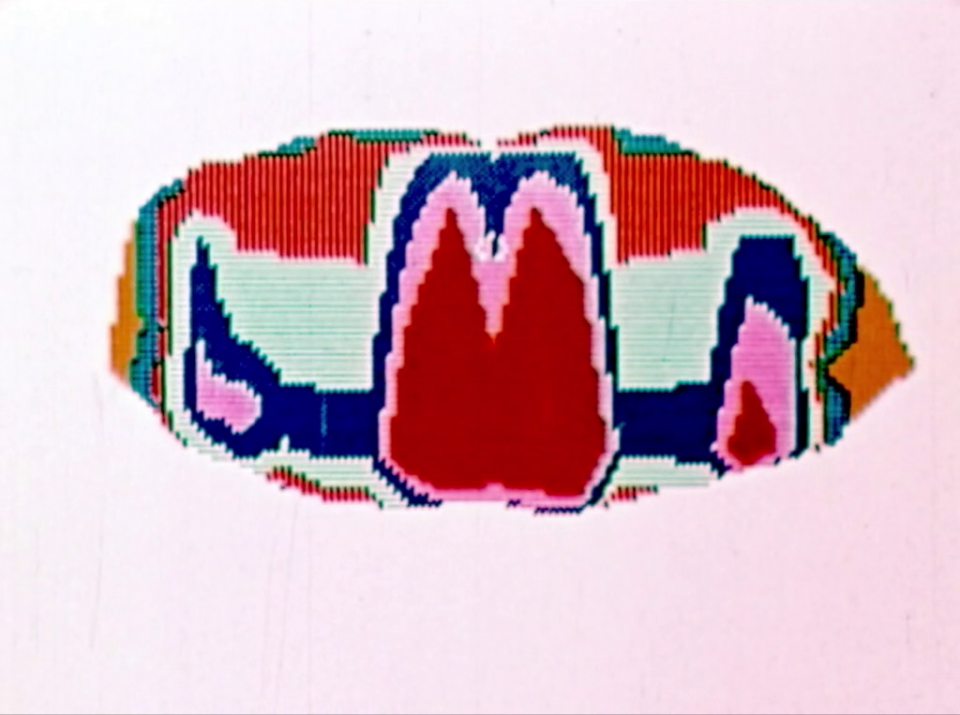
Lillian Schwartz's Apotheosis
Design a Tool using the p5.js library.
- Must include at least one custom function
- Must expose at least one parameter that meaningfully alters output
- Must produce different outcomes without rewriting the core logic
- Must be usable repeatedly (refreshing, adjusting controls, or input)
- Live sketch (hosted or runnable locally)
- Short written description explaining: what the tool does, what decisions are encoded, what it allows and what it restricts
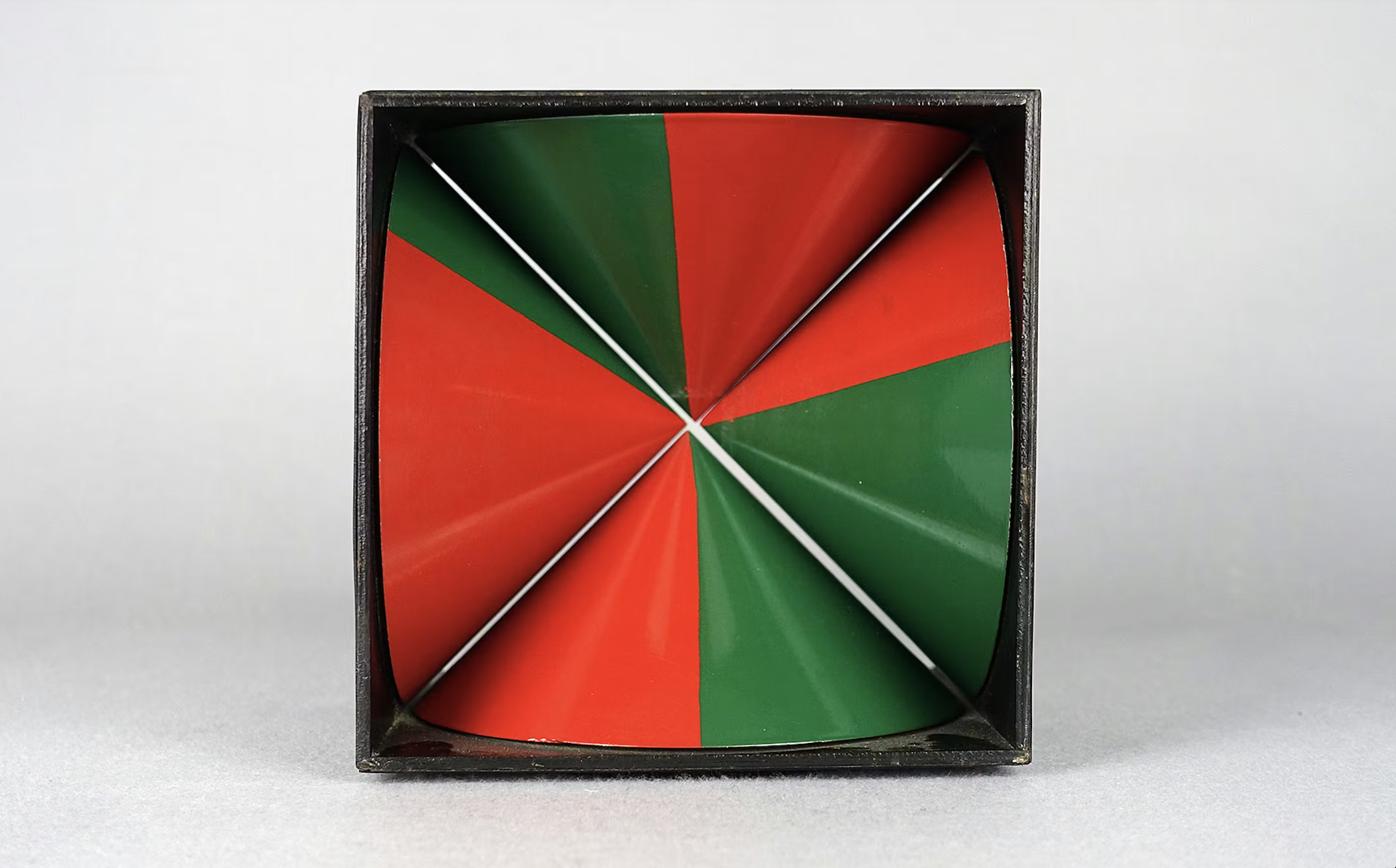
TetraCono by Bruno Munari
Design a dynamic system that changes over time. This project should emphasize behavior, rules, and transformation rather than static composition.
- A generative poem or score
- A visual system that accumulates or decays
- A rule-based drawing that evolves through repetition
- A system that responds to time, interaction, or stored data
The system should demonstrate intentional use of structure, repetition, and variation.
If you have a specific research interest based on the techniques explored in this class you are welcome to propose your own final project. A formal proposal must be submitted by 01/20 outlining the system being built, the techniques being used, and the role of time, change, or interaction.
Subject to change*